
BLOW UP PRESS
Winner of the 2020 BUP Book Award
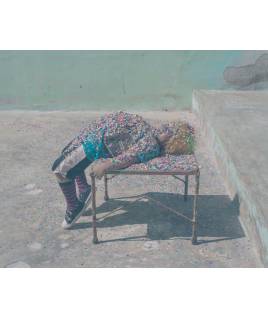
Henrik Strömberg (artist) and Jens Soneryd (writer) started their joint project The Compost in 2016. For them, the compost is a point of departure to explore alternative ways of being in the world, alternative practices of doing, thinking, sensing, seeing, and understanding. With “alternative ways of being in the world” they refer to perspectives that challenge the instrumental and reductionist ones that are predominant today, which provide a technocratic attitude towards the world, its objects, structures and societal institutions, but also toward its humans and other living beings, its nature, language and art.
According to the technocratic attitude, art works are means for communicating simple messages or for performing certain functions, and they are valued according to their potential of doing so - the aim of the work of art is to deliver certain measurable results that are decided in advance. Thus, contemporary art is part of the creative economy, it is attuned to the logic of advertising, design, and tech companies.
Within this view, lives are translated into projects, human beings are translated into brands that compete on various markets such as the labour market, the education market, the love market and so on, while nature appears first and foremost as something to be predicted, controlled and dominated, translated into a function as convenient resource. Thus, forests are transformed into either agricultural land or tree plantations, rivers into hydro-plants, mountains into mineral reserves or ski-resorts.
Failures, eccentricities and deficits are hidden in the pursuit for simplicity, success, and perfection. Human-as-brands lead active, social and eventful lives, not primarily for the joy of learning, experiencing, meeting people, and so on. Verbs like “living”, “experiencing”, “encountering”, “loving”, “desiring” have no intrinsic but only functional values. The actions they signify aim only to stage an eventful and prosperous life on social media; living as branding, that is.
Is it possible to love a forest that has become a tree-plantation? A river that has become a hydro-plant? A human being that has become a brand? A work of art that can be translated into a simple message without anything being lost in translation? A nature whose meaningfulness has been replaced with functionality? Probably not. Therefore, object amnesic: a compost manifesto aims to contribute to the re-enchantment of the world, by translating back functions into meanings, tree-plantations into forests, answers into questions, and first and foremost by turning our attention to the processes rather than to the intended results.
The book deals with topics such as growth and decay, memory and forgetting, permanence and change, the desiring gaze and the detached gaze. It also reflects on technologies for understanding, such as writing and photography. These are powerful technologies developed as aides for making visible, mapping, fixing, organising and governing. In short, they are powerful tools for keeping, controlling and preserving. object amnesic: a compost manifesto explores if and how these technologies also can be applied in opposition to their intended usages, if they can also be deployed to un-learn what we have learned from them.
It questions the predominant technocratic Cartesian view on nature as something to be measured, predicted and controlled. It challenges the very notion that control is a desirable achievement. Instead of trying to control and to govern artistic or natural processes, the book encourages us to join these very processes, to become part of them, or simply to acknowledge that we already are part of them despite that we most often pretend not to be.
And just like any compost, the book is an assemblage of things in various stages of completeness as the objects in the compost are not registered, and no actions are undertaken to save them from oblivion or decay - forgetting is just as important as remembering, ambivalence and doubt are just as important as knowledge and certainty. To reach without being able to reach is just as important as grasping. The aim of a compost is not to reach answers, explanations, or conclusions, but to produce fertile soil. So is the aim of this book.
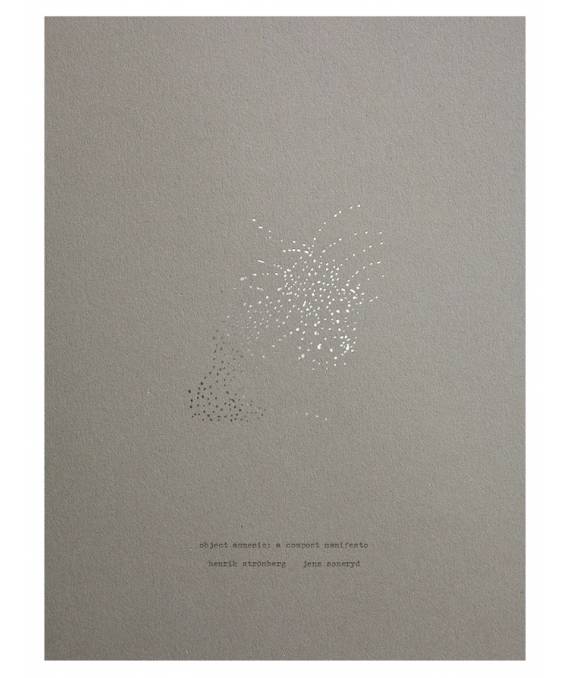
object amnesic: a compost manifesto
Henrik Strömberg & Jens Soneryd
Photographs: Henrik Strömberg
Poetry: Jens Soneryd
Essay: Chiara Valci Mazzara
Book design: Aneta Kowalczyk
Cover: Fedrigoni Materica Clay with hot stamping
Inside: Munken Pure, Fedrigoni Pergamenata Naturale
Format: 224x300 mm
Number of pages: 296
Number of photographs: 75
Language version: English
Print run: 800 copies
Printing & binding: Argraf, Warsaw, Poland
Publication date: December 2021
Publisher: BLOW UP PRESS
ISBN: 978-83-952840-8-3
BLOW UP PRESS
Other people were also interested in these titles


Xavier Barral
Half traveler and half migratory photographer, as he likes to introduce himself, Bernard Plossu strides along the world since many years. He captures through his lens furtive moments, where birds are flying in huge swarms or caught alone, standing proudly in the middle of a puddle, or gliding high up in the sky, among the peaks. The photographer looks at birds with tenderness and curiosity, a gaze which underlines fantasy and a “surrealistic” approach, as explains the critic Francesco Zanot about his images.
The flight fascinates the photographer, obsessed with the euphoric speed of swallows as well as the hypnotic inertness of large raptors drifting through the wind at high altitude. Plossu’s photographs allow us to see fragments of the world, a world in which birds have reinvested our environment.
The essay by ornithologist Guilhem Lesaffre underlines a fundamental aspect of bird life: migration as brought by Plossu’s photographs to light.
This book, along with the one of Pentti Sammallahti, launch our collection Des oiseaux (On birds) celebrating, through the vision of different artists, their immense presence in a world where they are now vulnerable.
DES OISEAUX . BERNARD PLOSSU
Xavier Barral
Hardcover, 20,5 x 26 cm
108 pages, 54 B&W photographs
Text (in French): Guilhem Lesaffre
ISBN : 978-2-36511- 189-8


Xavier Barral
The photographic oeuvre by Martine Franck (1938–2012) has finally been assembled in this comprehensive monograph, the most exhaustive to date, edited by Agnès Sire, artistic director of the Fondation Henri Cartier-Bresson. The work on this book has been undertaken in 2011 with Martine Franck. Through a chronological journey, including many unpublished images, the photographer has conceived different chapters spanning her entire life.
Feminism, social deprivation, the elderly, and Buddhism join artists, writers and landscapes as subjects that are visited and revisited over the years and through various travels to the United States, United Kingdom, Ireland or Asia, scrutinized through the lens of her selfless sensitivity, an eye for form and composition for the woman who wished to “greet the unexpected”. Her celebration of life, the joy of her knowing eye, and her commitment to different causes made Martine Franck a major figure on the international photographic scene.
MARTINE FRANCK
Xavier Barral
Two versions : English and French
Hardcover, 23 x 29 cm, 328 pages
300 B&W photographs and documents
Texts
Agnès Sire, Anne Lacoste
Interview between Martine Franck and Dominique Eddé
Illustrated biography drawn up by Cécile Gaillard with Aude Raimbault
ISBN FR : 978-2-36511-125-6
ISBN ENG : 978-2-36511-211-6
Copublished with the Fondation HCB

RM
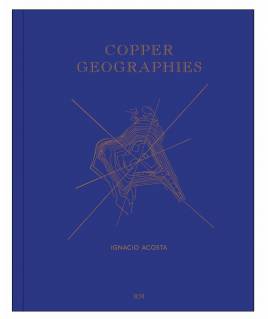
Copper Geographies explores the global own of mined copper. It presents a series of legwork explorations of geographically disparate landscapes historically connected by copper. It maps sites of transformation along the production network and commodity chain, documenting the mutation and transformation of copper from raw material to capital; through ore, smelted commodity, stock market exchanged value, assembled material and waste.
It discloses the uneven spatial conditions in which the material circulates by connecting the ecologies of resource exploitation in the Atacama Desert with the global centers of consumption and trade in Britain, and by making visible its return, hidden in manufactured goods, to the territories it originated from.
Copper Geographies . Ignacio Acosta
Texts
Ignacio Acosta, Andrés Anwandter, Termina
Goskar, Frank Vicencio López, Tony Lopez,
Louise Purbrick, Marta Dahó
RM
Softcover
192 pages
146 images
9 x 11 in
Design
Grégoire Pujade-Lauraine, José Luis Lugo
Bilingual edition (Spanish-English)
ISBN RM Verlag 978-84-17047-56-6


RM
The photobook Silent Songs starts from the formal and conceptual intervention that Claudia Hans makes from the book Songs for my Grandmother, written by Agnes Louise Dean in 1945, transforming the book into a current piece that simultaneously narrates part of the grandmother's life, what happened during the Holocaust and the history of the emigration of grandparents to Mexico, where it is possible to observe the parallelism of the history of Mexico with that of their countries of origin.
Claudia Hans holds a bachelor's degree in psychology from the Anahuac University and a master's degree in clinical psychology from Columbia University, New York, United States. She has studied photography in the Laboratorio Mexicano de Imágenes and the Gimnasio de Arte y Cultura. In the same way, she attended the Contemporary Photography Seminar of the Centro de la Imagen and the Photobook Incubator program of Hydra + Fotografía.
She has had several individual exhibitions, among which are “Morido”, Museo de la Ciudad de Querétaro (2015); “Cuando la gente muere”, Galería de Arte Joven, Centro Cultural Genaro Estrada (ISIC) and in Galería Antonio López Sáenz (GAALS), Sinaloa, Culiacán (2014); “Morido”, Centro Fotográfico Manuel Álvarez Bravo, Oaxaca; “Cuando la gente muere”, Centro Cultural de Tijuana CECUT (2013); “Morido”, Espacio Cultural Metropolitano de Tampico;”The End”, Galería Patricia Conde, Mexico City (2013), among others. She has also participated in numerous group exhibitions in Mexico, Spain, France and the United States.
Silent Songs, by Claudia Hans

Jungle Check, Cristina de Middel, Kalev Erickson
Cristina de Middel and Kalev Erickson use a set of anonymous images of the Mexican jungle of Tulum, discolored by the passage of time, to play with its reconstruction and re-interpretation, enriching them with probable narratives and visual games that place archival photography and its potential as the starting point of a story and not as the final destination of photography.
Jungle Check, Cristina de Middel, Kalev Erickson
Editorial RM Verlag
120 pages
Binding: soft cover
ENGLISH
ISBN: 9788417047719
2018


Skinnerboox
Giacomo Brunelli stalks the streets of New York with his old film camera, often for ten hours a day, looking for characters and details that are adrift in time.
His work has an air of nostalgia to it, and a film noir sensibility. The images are dark, shadowy, moody and a bit menacing — as if we’re looking through the eyes of a night detective, a voyeur or a stalker.
They provoke an unspoken narrative, offering up clues to an unknown mystery.
True to his love of old things and old ways, Brunelli shoots with a 1962 Miranda camera and prints in his darkroom.
NEW YORK . Giacomo Brunelli
February 2020
Edition of 500
Hardcover on leather
16,5x24cm
64 pages
ISBN 978-88-94895-31-5
–
Designed by Milo Montelli

Special edition
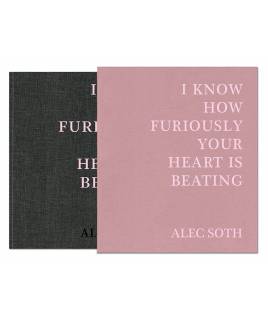
Taking its name from a line in Wallace Stevens’ short poem “The Gray Room,” Alec Soth’s latest book is a lyrical exploration of intimacy. While these large-format color photographs are made all over the world, they aren’t about any particular place or population. Whether made in Odessa or his hometown of Minneapolis, Soth’s new book is fundamentally about intimate encounters in private rooms.
“After the publication of my last book about social life in America, Songbook, and a retrospective of my four, large-scale American projects, Gathered Leaves, I went through a long period of rethinking my creative process. For over a year I stopped travelling and photographing people. I barely took any pictures at all.
When I returned to photography, I wanted to strip the medium down to its primary elements. Rather than trying to make some sort of epic narrative about America, I wanted to simply spend time looking at other people and, hopefully, briefly glimpse their interior life.
In order to try and access these lives, I made all of the photographs in interior spaces. While these rooms often exist in far-flung places, it’s only to emphasize that these pictures aren’t about any place in particular. Whether a picture is made in Odessa or Minneapolis, my goal was the same: to simply spend time in the presence of another beating heart.” - Alec Soth
Limited edition of 300 copies, divided into 2 sets of 150, each comprising a signed first edition of the book housed in a slipcase with one of two c-type prints [signed and numbered 1/150 - 150/150].
I Know How Furiously Your Heart Is Beating . Alec Soth
MACK
Embossed linen hardback
30 x 33.5cm
Interview with Alec Soth by Hanya Yanagihara
Publication date: March 2019
ISBN: 978-1-912339-31-0
Anómalas
Like is a symptom, a disruption in the ecosystem of visual production. It reveals the existence of a deranged approach to pictorial representation in which more importance is attached to showing our place in the world than to showing the world itself. In a society imbued with the capitalism – the excess, total accessibility and asphyxia – of post-photographic era images, the question arises whether it is any longer possible to experience the excitement of discovery.
Like is a printed image of our age, of this global village in which we live and where the human figure melts into the background like some kind of diluted being: a sign floating on the surface with no order, coherence or identity. And that explains Nave’s determination to move to some new, uninhabited land, perhaps further away than ever and perhaps even outside this reality.
Eduardo Nave (Valencia, 1976). He studied photography in Escola d’Art i Superior de Disseny in Valencia. In 2005 he founded, with 13 photographers, the photography collective NOPHOTO. His works have been exhibited around the world and can be found in numerous private and public collections. His oeuvre is represented by Galeria Pilar Serra (Madrid).
This book has received backing of gallery Pilar Serra, underbau, Control P and Palermo artes gráficas.
Like (2nd edition)
Eduardo Nave
Design: underbau
24 x 17 cm. 288 pages Softcover
isbn: 978–84-09-06510-3
Best Photography Book of the Year PhotoEspaña 2018 in the national category

André Frère
I have had the opportunity to portray Gabriel's entire transition from 2012 to 2018. When I met him I had not yet been able to start the hormonation and although psychologically I had buried Isabel, physically there were still traces of her. A year later she got the psychological report authorizing her to start the treatment and began the first physical changes of her body and began to discover the meaning of the word happiness.
Mar Saez
I have had the opportunity to portray Gabriel's entire transition from 2012 to 2018. When I met him I had not yet been able to start the hormonation and although psychologically I had buried Isabel, physically there were still traces of her. A year later she got the psychological report authorizing her to start the treatment and began the first physical changes of her body and began to discover the meaning of the word happiness.
My photographic production, in which a physical transition from woman to man is observed, is complemented with archive images of his childhood and Gabriel's own photographic production, specifically some selfies that he has uploaded to social networks and that now appear in the book. The book also includes phrases taken from diaries and interviews I did with Gabriel that help to understand his psychological evolution during these years. Mar Saez
Stapled Binding
ISBN 979-10-92265-79-8
EAN 9791092265798
Pages 30
Year 2018
Language Spanish, French, English
Design underbau
Gabriel Texts
André Frère Éditions Publishing
Edition Laia Abril
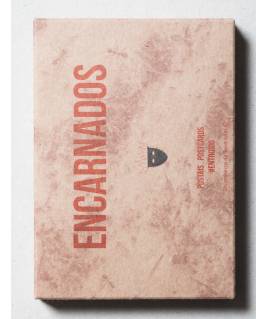

DISPARA
Encarnados is a photographic project about the Galician carnival (Entroido) in which Tono Arias has been working for more than a decade.
This project has been formalized in three photobooks, posters and a collection of postcards. Encarnados, DesXeo and Preto, these are the titles of the three volumes. With a careful and original design and images, the author presents us an absurd, messy, ironic, anarchic and intuitive visual journey.
Tono Arias is a photographer since the 80s. He worked in various media and has published several books and participated in numerous exhibitions. From his studio in Galicia he works in the field of commercial photography, architecture and editorial.
In 2012 he starts the project “DISPARA”, a cultural space revolving around documentary and artistic photography: an art gallery, bookstore and publisher specialized in photobooks.
POSTCARDS ENCARNADOS
Box with 23 postcards
11x15 cm
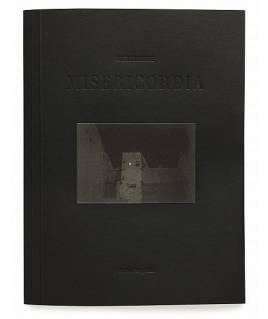
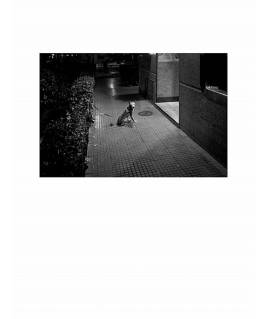
PHREE
A nocturnal journey through the city itself turned into an ode to the lonely.
Miércoles de Misericordia
Rafael Trapiello
MEASUREMENTS 160 x 220 mm
TYPE OF RUSTIC ENCOUNTERNATION
TYPE OF PRINTING Offset
NUMBER OF PAGES 64
AUTHOR OF THE TEXTS Elvira Lindo
Design Underbau
PHOTOMECANIC Eduardo Nave
PRINT AG Palermo
ENCUADERNACIÓN Méndez
YEAR 2018
ISBN 978-84-949261-2-9
NUMBER OF COPIES 500
COLLECTION away
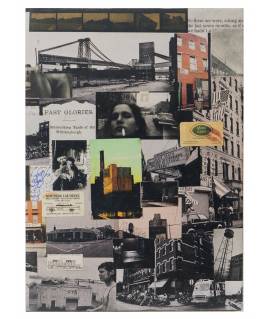

Red Hook
Williamsburg, A Place I Once Called Home is Mara’s personal record of her life there between the years of 1994 and 1996. With a distinctive style, she beautifully weaves B&W urban landscapes, intimate portraits, and lyrical street scenes with stories, personal letters, and diary entries in both Spanish and English.
The book is at once a wonderful record of a particular epoch and a historical archive of many places in Williamsburg which have either radically changed or cease to exist. It’s a window into the life of a woman strongly connected to her changing and expanding world, and also very much tied to where she comes from. More than two decades later Mara continues to live in Williamsburg, a reluctant witness to the massive transformation and the disappearance of familiar places and faces. This book is her ode to what it once was, a place she once called home.
Williamsburg, A Place I Once Called Home
Photographs and text by Mara Catalán
Design by Bonnie Bryant
Red Hook Editions, 2018
Edition of 700 copies
Hardcover with dust jacket
156 pp., b/w and color illustrated throughout
210 x 297 mm
ISBN 9781941703076
Rorhof
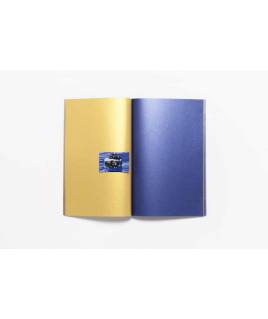
Blue as Gold offers an artistic response to the issue of migration. Alternating gold and blue sheets of paper in between which float small-scale photographs of migrant boats crossing the sea, the volume prompts a reflection on the frailty of human life.
Found on the web rather than shot in the original, the images of migrants aboard boats directed towards the coasts of Europe emphasise the anonymity of the lives depicted. Being easily retrievable, however, these same images make it clear how easy it is to ignore what lies in the open.
In Blue as Gold, images of migrants hang loose in between its pages, conveying the same sense of precariousness that someone left ashore for days, sometimes weeks or months, experiences before reaching the coasts of Europe. Pictures may easily fall out of the book, forcing the reader to fish the sunken boat himself from atop its comfortable upper deck; a hook to force the gaze downwards.
BLUE AS GOLD . Nicolò Degiorgis
2017
Edition: 350
Format: softcover
Pages: 46
Size: 16 x 24 cm
ISBN: 978-88-94881-09-7

TBW
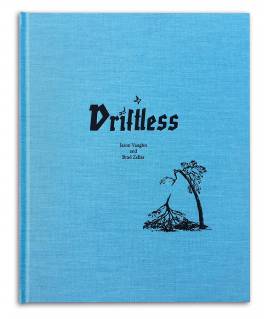
The images in Driftless were made by photographer Jason Vaughn during a period of life that found him wandering for a year in a region of Wisconsin known colloquially as the Driftless Area, named for the rugged terrain formed by a lack of pre-Illinoian continental glacial ice flow (“drift”). Vaughn’s temporary home seemingly describes the landscape as much as its human inhabitants.
While living in a rented apartment off the Mississippi River, awaiting the birth of his second child, and at the beginning of a second life chapter following a tenuous bout with cancer, Vaughn attempted to establish community despite his status as temporary visitor. During this in-between state his daily walks not only nurtured his art practice but also allowed for moments of clarity and belonging to seep into that practice.
Continuing in this spirit of a shared yet transient experience, the final image edit was given to author and journalist Brad Zellar, to lend his own verbal meanderings to the images, embedding a dueling but complementary narrative to the book.
An otherwise charged photograph of birds mid-flight, no doubt bound for a warmer and more hospitable climate is subdued and balanced by the caption “hey, options.”
Amongst his words, casual, yet world weary, we find a sense of sophisticated levity, fostering feelings of the hope over despair.
While creating the images for Driftless, Vaughn intimates that living next to the river allowed him to contemplate the human experience in a new way and to meditate on “the process by which people can drift through a space, sometimes becoming lodged, sometimes becoming permanent, and sometimes breaking free and moving to a new location.”
As a duo, Vaughn and Zellar assist one another in weaving a narrative until their voices seem one. Each fleeting moment adds a layer of meaning, transforming, over time, from a conversation to a shared story.
DRIFTLESS . Jason Vaughn
Brad Zellar
Signed
Clothbound hardcover with tip-on image on verso
92 pages
50 color plates
9 x 11.25"
ISBN 978-1-942953-38-8