


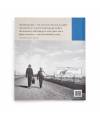

Moma
Dorothea Lange (American, 1895–1965) conveyed the stories of everyday life with sharp and compassionate attention to the human condition. Her career is widely heralded, yet the connection she cultivated between words and pictures has received scant attention. In conjunction with a major exhibition at The Museum of Modern Art, this catalogue provides a fresh approach to some of her most iconic images, such as White Angel Breadline (1933) and Migrant Mother (1936), as well as rarely seen works. These photographs, some reproduced in their original published form, are accompanied by contributions from a distinguished group of contemporary writers, artists, and critical thinkers who respond to the images with observations both personal and scholarly. By viewing the breadth of Lange’s career and the diverse contexts in which her work appeared, we gain a more nuanced understanding of her achievement and her belief that “all photographs can be fortified by words.”
Includes contributions by Julie Ault, Kimberly Juanita Brown, River Encalada Bullock, Sam Contis, Jennifer A. Greenhill, Lauren Kroiz, Sally Mann, Sandra S. Phillips ,Wendy Red Star, Christina Sharpe, Robert Slifkin, Rebecca Solnit, and Tess Taylor. 176pp; 152 illus.
Dorotea Lange . Words and Pictures
Size 9w x 10.5"h
Year of Design 2020
Origin Spain
Author Sarah Hermanson Meister
Pages 176
Genre MoMA Publications
Moma
Other people were also interested in these titles

MACK
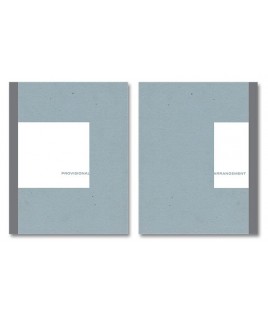
Winner of the 2016 Prix Elysée, Martin Kollar’s new work, Provisional Arrangement, considers that which is temporary in a world made up of provisional situations and solutions. "We are tenants of culture", wrote Nicolas Bourriaud, foreseeing a world of precarious inhabitation of ideas. “I grew up in Czechoslovakia during the Communist era,” says Kollar, “and with the motto, with the Soviet Union for all Eternity – which has been one of my few experiences with eternity... People of my generation fight against the void left behind the abandoned dogmas.” It is this world that Kollar turns to, one of aborted eternities and slackened certainties – to situations which reveal the disintegra-tion of permanences, capturing their fall into the provisional.
Martin Kollar was born in Zilina, Czechoslovakia (now Slovakia). He studied at the Academy of Performing Arts Bratislava and has been working as a freelance photographer and cinematographer since he graduated. He has received several grants and awards, including the Fuji Film Euro Press Photo Award and the Backlight Photography Award in Finland. His work has been exhibited across the world, including Maison Européene de la Photographie Paris, France, Rencontres d’ Arles in France, MOCA Shanghai China, Guandong Museum of Art in China and Month of Photography in Krakow. His previous books include, Nothing Special (2008), Cahier (2011) and Field Trip (MACK, 2013)
Martin Kollar
Provisional Arrangement
MACK
Embossed hardcover with coloured boards
72 pages
38 colour plates
20 cm x 25.5 cm
Publication date: September 2016
ISBN 9781910164501


Roshin books
There was a time in my late 20's when I had a desire to disappear from the plane of worldly affairs. Kumogakure has no direct translation in English. It means to be hidden by clouds, shrouded, invisible. No longer able to endure my world and he affairs that surrounded it, I spent two years wandering blindly through fog-draped Hokkaido and Tohoku.
The same volcanic activity that gave birth to Japan is the source of its hot springs, called onsen in Japanese. The onsen depicted in this book are but a minuscule fraction of the 3,000 hot springs that are said to exist across the archipelago.
By chance I became fascinated with the natural steam clouds that rise from these curative, restorative onsen. Springs vary in Japan - there are naturally warmed hot springs, mineral springs, hidden springs, watering places, and small, ancient spa towns. No matter what the type, anywhere is fine so long as you have hot springs and name. The banal and the extraordinary meet at these springs, as do life and death. They heal both locals and travelers. These hot springs are suffused with nostalgia and afford the pleasure of unique visual experiences. These are the places I rambled through, taking photographs.
As I traveled through these places, I dreamt of a transcendental self beyond my own identity. Flooded with memories of experiences I had never had, encompassed by all emotions, I felt a tremendous longing for a self from unknown times that was without gender or age, raised and nurtured in and among these unknown mountain settlements and seaside towns.
The photos within this book were completed in 2003. More than a decade later they undeniably reflect what I saw on my travels. However, as time passes, they have gradually begun to feel to me as though they were taken by someone else, from a different world.
Sorting through these photos in making this book, I realized that deep within me there is a dark flashpoint that has no place to go. I'll probably return to my reclusive travels among the hot springs. I hope that perhaps this book will become as ephemeral as smoke, seeming to disappear upon publication, only to be met again decades from now through chance and the joy of a reader.
Limited edition of 700 copies
Masakazu Murakami
KUMOGAKURE ONSEN : Reclusive Travels
imited edition of 700 copies
104 pages, 91 black & white plates
print on cloth ; hardcover
text ; Japanese and English
book design ; Katsuya Kato
size ; 225mm x 270mm x 15mm
roshin books 2015
ISBN 978-4-9907230-2-6

Rorhof/Lyre
Max Pinckers and Daisuke Yokota are both interested in the surfaces of photography, and the limitations the two-dimensional image has in shaping our understanding of the world; make a two-dimensional image and you get a two- dimensional understanding.
Their work is about surface and adding dimensions to it in different ways, but where Pinckers questions the past frameworks of photography and looks at the historical tropes of photography and how they are embedded into our reading of images on a subconscious level, Yokota builds meanings up from the present, layering the past into his images through his repeated exposures and interventions with the primary print.
The series Two Kinds of Memory and Memory Itself questions the way we take photography for granted, the way in which we learn to expect certain things and to shut other things out, especially in a country that is defined overseas by photographic cliché.
It gets behind the expectations we have of Japan based on the clichés we have learnt to expect. Luigi Ghirri wrote, ‘Photography always shows what we already think we know’ and that is the sentiment at the heart of this project.
For this series, Pinckers took groups of Japanese dressed as salarymen, cosplayers, or sumo wrestlers to the fringes of urban Japan. Outfitted in suits, loin cloths, and bear outfits he took them to those Japanese places that we don’t see in Europe; the edges of streams, deserted car parks, the depths of the forest.
And once there he staged images of things that his performers were, according to the traditional representation of Japan in the west, expected to do. They collapsed drunk (in true salaryman style), they had naps, they smoked cigarettes, they were subjected to sudden gusts of wind, or they sang karaoke.
It’s an encyclopaedia of Japanese photography tropes then, and there’s very little mystery there.
That lack of mystery is what Pinckers unpacks. He varies the landscape, the players and the dress, and allows moments to unfold which he photographs. But simply because these combinations of landscape, players, and moments are different, we see something new. We see a Japan that doesn’t look as
CURATORIAL NOTE: Both artists were given the same amount and type of paper but their photographs were printed on opposite fibre directions. Max Pinckers’ work was presented vertically, while Daisuke Yokota’s horizontally, both using the same quantity of plywood. No nails or adhesives were used in the exhibition.
Edition of 1000 copies, with accompanying text by Colin Pantall.
Unusual interleaving publication by these two acclaimed artists.
Foto Forum . Max Pinckers Daisuke Yokota
Publisher: Rorhof/Lyre 2016
Format: Softcover 1st edition
Roshin Books
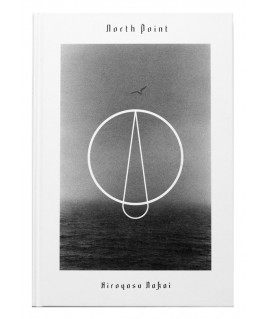
After the sudden death of Hiroyasu Nakai in February, 2016, Daido Moriyama, a friend of Nakai's for over 40 years, carefully selected photographs from approximately 500 of Nakai's original prints. “North Point” is the result of this edit.
Hiroyasu Nakai was born in Hachinohe City, Aomori in 1955. He participated in Eikoh Hosoe's WORKSHOP photo school in 1976. Upon graduation, he began a new chapter in his life as a photographer and became a member of CAMP, an artist-run photo group and gallery headed by Moriyama. After he left CAMP, he independently established a photo gallery Hokuten (North Point) in his hometown in 1988, and began exhibition his own work in a series of exhibitions. “North Point” features photos taken in Hachinoche City during Nakai's time there.
Regarding Nakai's pictures Moriyama has said that they are “neither honest reporting nor his love for his hometown. The photographer Hiroyasu Nakai integrated himself into his environment with a deep understanding.”
Nakai's perspectives of Hachinohe City are expressed in the publication of “North Point”, published by Roshin books with the assistance of Satoshi Machiguchi, a Japanese art director. “North Point” will surely be regarded as a historically important contribution to the world of photography.
Limited edition of 700 copies.
North Point . Hiroyasu Nakai
Roshin Books 2016
Pages: 96
Format: Hardback 1st edition


Libraryman
Ron Jude’s (b. 1965, American) Vitreous China is comprised of an archive of photographs he made while exploring areas of light industry in (primarily) Midwestern American cities. Rather than comment on the workings of industry itself, Jude depicts the ambient peripheral zones suffusing these environments: big rig parking lots, side exits, and other secondary spaces in which Jude imagines his grandfather might have daydreamed, or let his mind wander, during his many years as a kiln operator in vitreous china plants, first in the Midwest, and later in Southern California.
Supplanting the narrative inadequacies of photography with an alternate experience of atmospheric immersion, Jude exploits the seemingly factual, descriptive traits of the medium while also pursuing moments of subjective transcendence. Like the paradoxical relationship between the surface beauty of vitreous china (an enamel coating applied to porcelain) and its blunt, utilitarian function (strengthening toilets & sinks), the photographs, interwoven with a series of short texts by Mike Slack, attempt to tease out an experience that embraces both the physical crudeness of these spaces as well as the intangible complexes of memory and narrative encoded within them.
First edition of 375 copies, numbered. Special edition of 25 numbered copies, with signed archival pigment print.
RON JUDE . VITREOUS CHINA
16 cm x 20 cm. 54 pages. 1 gatefold. 29 color plates. Offset printed softcover. Saddle-stitched, in grey paperboard clamshell with typography in white foil.
ISBN 978–91–88113–04–7
Published in 2016.


MACK First Ed.
The early settlers dubbed California The Golden State, and The Land of Milk and Honey. Today there are the obvious ironies – sprawl, spaghetti junctions and skid row—but the place is not so easily distilled or visualized, either as a clichéd paradise or as its demise. There’s a strange kind of harmony when it’s all seen together—the sublime, the psychedelic, the self-destructive. Like all places, it’s unpredictable and contradictory, but to greater extremes. Cultures and histories coexist, the beautiful sits next to the ugly, the redemptive next to the despairing, and all under a strange and singular light, as transcendent as it is harsh.
The pictures in this book begin in the desert east of Los Angeles and move west through the city, ending at the Pacific. This general westward movement alludes to a thirst for water, as well as the original expansion of America, which was born in the East and which hungrily drove itself West until reaching the Pacific, thereby fulfilling its “manifest” destiny.
The people, places, and animals in the book did exist before Halpern’s camera, but he has sewn these photographs into a work of fiction or fantasy—a structure, sequence and edit which, like Los Angeles itself, teeters on the brink of collapsing under the weight of its own strangely-shaped mass.
Gregory Halpern was born in 1977 in Buffalo, New York. He has published a number of books, including A (2011), Omaha Sketchbook (2009) and East of the Sun, West of the Moon (2014), a collaboration with Ahndraya Parlato. He also edited, along with Jason Fulford, The Photographer’s Playbook: Over 250 Assignments and Ideas (2014). He holds a BA in History and Literature from Harvard University and an MFA from California College of the Arts. In 2014 he was the recipient of a Guggenheim Fellowship.
[…] traditional American landscape photography has become a rather moribund photographic trope [...] a sanctified, cliched reverence has become the norm. In Halpern’s California work, I see him removing himself from the comforts of the past and endeavoring to strike out afresh, rethinking his conditioning and antecedents to break free of this particular mould.
— Chris Killip
Beauty and its implication of promise is the metaphor that gives art its value. It helps us rediscover some of our best intuitions, the ones that encourage caring.
— Robert Adams
Gregory Halpern ZZYZX
First Edition
Silkscreen printed hardcover
128 pages
77 colour plates
24 cm x 29 cm
ISBN 9781910164655

Self-Published
For the past five years, I have photographed with unrestricted access the newsroom and printing plant of The Philadelphia Inquirer. Through a depiction of The Inquirer’s efforts to prevail despite depleted ad revenue, a steady decline in circulation, lay-offs, buy-outs, and bankruptcy, my intent is to reveal the challenges and harsh realities that face the newspaper industry today.
This project has not received any financial backing and has been entirely self-funded for the past five years. It has been a long journey and I have pushed the boundaries to the absolute extreme on my own. To complete the final chapter of this story and fund the publication of DEADLINE, I humbly ask for your support. Please help make sure this story gets told.
A close examination of the newspaper industry and in-depth story explaining the events that landed newsrooms in their current predicaments has largely gone untold. Having shed 30% of its workforce in the past decade newspapers are America's fastest shrinking industry, yet more than half of American adults know little to nothing about the financial struggles that have eviscerated newsrooms. At a time when a third of U.S. adults get their news on Facebook, newspapers' transition into a digital era has been mired in a dire hunt for sustainable online advertising revenue as papers nationally have lost $25 billion in advertising revenue over the past ten years and in 2012 newspapers lost $16 in print ad revenue for every $1 made in digital ad revenue
As we find ourselves amidst a massive societal transition into an information technology economy of the future in which technological advances have eroded middle skill, middle class jobs, boosted productivity while reducing the labor force, what has been the human cost of these gains? The newspaper for centuries has served as a cornerstone of American society holding our country’s institutions, CEOs, politicians and big businesses accountable for their actions, upholding the values, laws and morals that our democracy was founded upon. When we lose reporters, editors, newsbeats and sections of papers, we lose coverage, information, and a connection to our cities and our society, and, in the end, we lose ourselves. Without the human investment to provide news content it becomes a zero sum game on the information highway to nowhere. The fibers of the paper and the clicks of the mouse are worthless unless the words they are presented on have value. The newspaper is much more than a business, it is a civic trust.
EADLINE (Vol.2 – Book)
By Will Steacy
Introduction by Gene Roberts
192 pages
277 photographs, reproductions & archival documents
9.4 x 12 inches
b.frank books, 2016
ISBN 978-3-906217-07-9
Designed by Will Steacy
A five year examination of the Philadelphia Inquirer newsroom reveals the challenges and harsh realities facing the newspaper industry

Self-Published
For the past five years, I have photographed with unrestricted access the newsroom and printing plant of The Philadelphia Inquirer. Through a depiction of The Inquirer’s efforts to prevail despite depleted ad revenue, a steady decline in circulation, lay-offs, buy-outs, and bankruptcy, my intent is to reveal the challenges and harsh realities that face the newspaper industry today.
This project has not received any financial backing and has been entirely self-funded for the past five years. It has been a long journey and I have pushed the boundaries to the absolute extreme on my own. To complete the final chapter of this story and fund the publication of DEADLINE, I humbly ask for your support. Please help make sure this story gets told.
A close examination of the newspaper industry and in-depth story explaining the events that landed newsrooms in their current predicaments has largely gone untold. Having shed 30% of its workforce in the past decade newspapers are America's fastest shrinking industry, yet more than half of American adults know little to nothing about the financial struggles that have eviscerated newsrooms. At a time when a third of U.S. adults get their news on Facebook, newspapers' transition into a digital era has been mired in a dire hunt for sustainable online advertising revenue as papers nationally have lost $25 billion in advertising revenue over the past ten years and in 2012 newspapers lost $16 in print ad revenue for every $1 made in digital ad revenue
As we find ourselves amidst a massive societal transition into an information technology economy of the future in which technological advances have eroded middle skill, middle class jobs, boosted productivity while reducing the labor force, what has been the human cost of these gains? The newspaper for centuries has served as a cornerstone of American society holding our country’s institutions, CEOs, politicians and big businesses accountable for their actions, upholding the values, laws and morals that our democracy was founded upon. When we lose reporters, editors, newsbeats and sections of papers, we lose coverage, information, and a connection to our cities and our society, and, in the end, we lose ourselves. Without the human investment to provide news content it becomes a zero sum game on the information highway to nowhere. The fibers of the paper and the clicks of the mouse are worthless unless the words they are presented on have value. The newspaper is much more than a business, it is a civic trust.
Featuring Essays By:
Roger Allaway, Ann Applegate,Mike Armstrong, Tony Auth, Sandy Bauers, Art Carey, John Carroll, George Carter, Andrew Cassel, David Cohen,Porus P. Cooper, Marguerite Del Giudice, Clark DeLeon, Melissa Dribben, Murray Dubin, Jane Eisner,Larry Eichel, Bob Fernandez, Tom Ferrick, Kevin Ferris, Gene Foreman, Robert Frump, Joseph Gambardello, Jeff Gammage, Joyce Gemperlein, Thomas Ginsberg, Josh Gohlke, Kristen Graham, Mel Greenberg, Cynthia Greer, Kia Gregory, Alan J. Heavens, Karen Heller, Chris Hepp,Miriam Hill, Deirdre Childress Hopkins, David Cay Johnston, Don Kimelman, Monica Yant Kinney, Andrea Knox, Mike Leary, Daniel LeDuc, Jennifer Lin, Sandra Long, Alfred Lubrano, Bill Marsh, Dale Mezzacappa, Alexis Moore, Arlene Notoro Morgan, Jonathan Neumann, Rick Nichols, Mike Placentra, Dick Polman, Natalie Pompilo, Carrie Rickey, Avery Rome, Daniel Rubin, Stephan Salisbury,Don Sapatkin, Stephen Seplow, Tom Steacy, Allison Steele, James Steele, John Sullivan, Sue Syrnick, Miriam Tarver, Mike Vitez, Jane Von Bergen, Butch Ward & Amy Worden
DEADLINE (Vol.1 – Newspaper)
By Will Steacy, Tom Steacy & Current and Former Staff of The Philadelphia Inquirer
80 pages, 5 sections
677 Illustrations, 70 Essays
11 x 22 Inches
b.frank books, 2015
ISBN 978-3-906217-06-2
Designed by Will Steacy
Printed At The Philadelphia Inquirer’s Schuylkill Printing Print
A five year examination of the Philadelphia Inquirer newsroom reveals the challenges and harsh realities facing the newspaper industry

Self-Published
"Sometimes the photographs contain elements that seem to suggest a rapidity or improvisational quality, e.g. somebody who strokes a cat, the flying pigeons in the park or the ladyboy who seems to wipe her eyes.
This peculiar quality adds a supplementary layer of ambiguity. Is the photograph staged? And if so, why? Of course, unpredictable or uncontrollable elements make a photograph come alive, but in this particular case the unpredictable elements are a means to approach real life despite the diligent set preparation, lighting and framing.
If everything would be controlled, the photographs wouldn't be ambiguous: they would only depict a staged reality. Through working slowly and diligently, the photographers create a situation in which unexpected things can take place: birds can fly, a cat can pass or a person can pluck something from his or her eyelashes." - Hans Theys
Lotus (2016)
Max Pinckers & Quinten De Bruyn
Published by Lyre Press
Hardcover
195 x 270 mm
152 pages
Full color offset
Sewn bound
Edition of 3000
ISBN 9789082465518
Design by Manuel Zenner
After a limited edition dummy book produced in 2011 at
Werkplaats Typografie, Arnhem, The Netherlands
Text by Hans Theys, Our Ladies of the Flowers
Montagne de Miel, 2011 (revised in 2016)
Printed by Die Keure, Bruges
Excerpt from Our Ladies of the Flowers by Hans Theys

RRB
Post-Script revisits Laura El-Tantawy’s journey through Cairo’s iconic Tahrir Square five years from Egypt’s momentous revolution and one year after the release of her self-published monograph, “In the Shadow of the Pyramids.” The pocket-sized publication features previously unpublished images and written reflections where El-Tantawy takes readers behind the photographs and into the thoughts and emotions that went into making them. It can be considered a reflection on the act of photography itself. The publication is released to coincide with the Deutsche Börse Photography Foundation Prize 2016, for which “In the Shadow of the Pyramids” is nominated
LAURA EL-TANTAWY - POST-SCRIPT
Edition of 750 copies, Signed and numbered
32 pages, Double sided including 15 color photographs, Paper - Munken Lynx 300gsm & Colorplan red, 11x15 cm
Edited by Colin Pantall, Design - Design by Victoria, Bristol 2016
La Fábrica
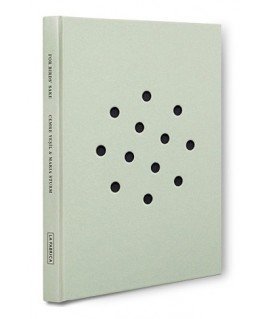
A symbol of schism and confluence, a transcontinental city, Istanbul has always been the inspiration for great stories. But this is not a story about Istanbul; it is a story from the female vantage point about how a group of men devote their lives to raising goldfinches and greenfinches: a mysterious bond full of contradictions, love, possession and pleasure; the contradictions between the masculine and feminine; the female caress alongside the power of men; caregivers who compete for the bird that sings the best… And two women who learn how to listen and speak.
For Birds' Sake
Maria Sturm & Cemre Yesil
ISBN: 9788416248339
Page: 88
Size: 16,2x22,5 cm
Language: Spanish/English/Turkish

La Fábrica
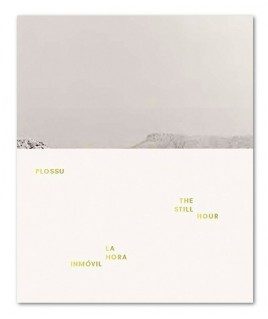
Mediterranean metaphysics is the subtitle of this project by the French artist Bernard Plossu. It gathers 150 images taken over the course of 30 years in the south of France, Spain, Greece, Italy and Turkey.
In these snapshots, the omnipresent white light eclipses people in a visual exercise that reflects on the real dimension of the landscapes and architectures. The images shape a timeless space in an almost dream–like journey through time and light
La hora inmóvil Bernard Plossu
ISBN: 978–84–16248–53–7
Page: 144
Size: 23x28 cm
Images: 106
Language: Esp. / Engl.
MACK
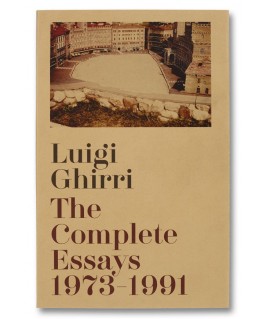
Luigi Ghirri (1943–1992) started writing about photography from the moment he became a photographer: for his own publications, for Italian magazines and newspapers, as well as private reflections committed to paper, where his thoughts would settle and then often depart in new directions.
Published for the first time in English, The Complete Essays 1973–1991 comprises sixty-eight texts in which Ghirri explores the same subjects at the core of his photographs – the themes of identity, time, memory, vision, representation, and sense of place. As a voracious reader with a particular taste for the eclectic, Ghirri also reaches outwards from his own practice to explore the history of photography as he considers the work of Walker Evans, William Eggleston, Robert Adams and John Gossage, weaving in references to musicians, writers and painters alike. As themes and ideas overlap, the compilation of texts create a sort of dialectic chamber of curiosities that includes Gulliver, Van Gogh’s yellow house, Cézanne, Morandi’s studio, Mallarmé, the fireworks above Trani Cathedral, neo-realist films, lots of music, Francis Bacon, McLuhan’s global village, Pessoa, poetry. Together, the essays offer an unintentional yet comprehensive treatise on the history and theory of photography, and above all, they constitute a special form of autobiography.
Born in Scandiano in 1943, Luigi Ghirri spent his working life in the Emilia Romagna region, where he produced one of the most open and layered bodies of work in the history of photography. He was published and exhibited extensively both in Italy and internationally and was at the height of his career at the time of his death in 1992. His first book, Kodachrome (1978), an avant-garde manifesto for the medium of photography and a landmark in his own remarkable oeuvre, was re-published by MACK in 2012.
Luigi Ghirri
The Complete Essays 1973–1991
240 pages
50 colour plates
14 cm x 22.8 cm
68 essays, 65,000 words
Publication date: May 2016
ISBN 9781910164143

La Luminosa
Aby Warburg states that historic discourse is never born, that it can always begin again. That the past is as much invented as discovered and it's the mere product of an inventor of history (the historian), who reconstructs the absence of the lost object and shapes, from his point of view and his context, a story.
La forma bruta looks back to our origins investigating the process of representation of hegemonic discourses through the Museum. The project relates the object exhibited, the device that exhibits it and the point of view of the one who observes it. It ́s about (re) imagining history through images, of making a study of the past that may generate possibilities of other futures, of activating dormant stories and understanding that the present bares the mark of multiple pasts and history has the power to change.
LA FORMA BRUTA Martín Bollati
Editorial La Luminosa/Cuadernos de la Kursala, 2016
Editing: Martín Bollati & Koln St.
Design: Koln St.
Prepress: Víctor Garrido
Edition of 750 copies
ISBN 978-987-3751-09-7